Immerse yourself in the spectacular natural landscapes of the Peruvian Andes on this 4-day trek from Cusco to the ruins of Choquequirao.
Choquequirao Trek
Day 1: Cusco – Cachora – Chiquisca
Having picked you up from your hotel in Cusco between 4 and 4:30 am, we'll set off on the road to San Pedro de Cachora, where we'll begin our first trekking route. Along this trail, which will take approximately 3 hours, we'll reach the Capulliyoq viewpoint: the perfect spot to admire the Apurimac River and the ruins of Choquequirao in the distance.
From this viewpoint, we'll walk down a zigzagging path to Chiquisca. Here, we'll enjoy lunch and dinner before relaxing for the evening.
Day 2: Chiquisca – Santa Rosa – Marampata – Choquequirao
After breakfast in Chiquisca, we'll set off on our second trekking route. The hike will take us approximately 5 hours and we'll make two stops along the way: one in Santa Rosa for lunch and another in Marampata to enjoy the views of its beautiful surroundings from its famous panoramic viewpoint.
We'll spend the night in a hostel in Marampata.
Day 3: Choquequirao
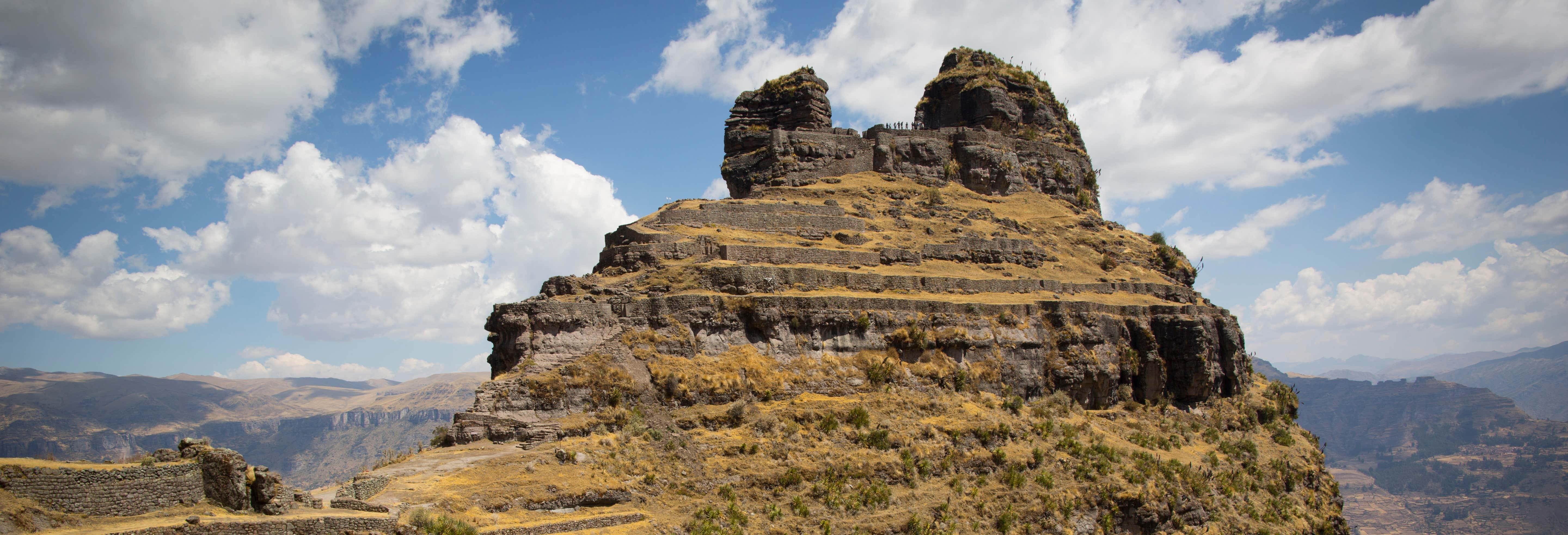
Following breakfast in Marampata, we'll walk for about an hour and a half to the ruins of Choquequirao. Known as the "little sister of Machu Picchu", this archaeological site still preserves the remains of temples, storage buildings and other public spaces that will give us fascinating insight into the history of pre-Columbian Latin America.
In the afternoon we'll walk back to Marampata, where we'll have dinner and rest until the next day.
Day 4: Choquequirao – Playa Rosalina – Capulliyoq – Cusco
We'll have breakfast to recharge our batteries and walk back to Capulliyoq. We'll make a stop at Playa Rosalina, and then we'll head to Chikiska, where we'll have lunch. We'll then continue through the Apurimac valley to Capulliyoq, where the pickup vehicle will pick us up to return to Cusco.
Accommodation
The route includes lodging in local hostels.
Important
This trek takes place at sites located at altitudes ranging from 2,000 to 3,400 meters (6,562 to 11,155 feet) above sea level. Therefore, the activity is not recommended for people with physical disabilities or those who have difficulty breathing or walking at high altitudes.